
Makarska Riviera
Destination
Villa Laurante · Destination Guide
Welcome to the Makarska Riviera
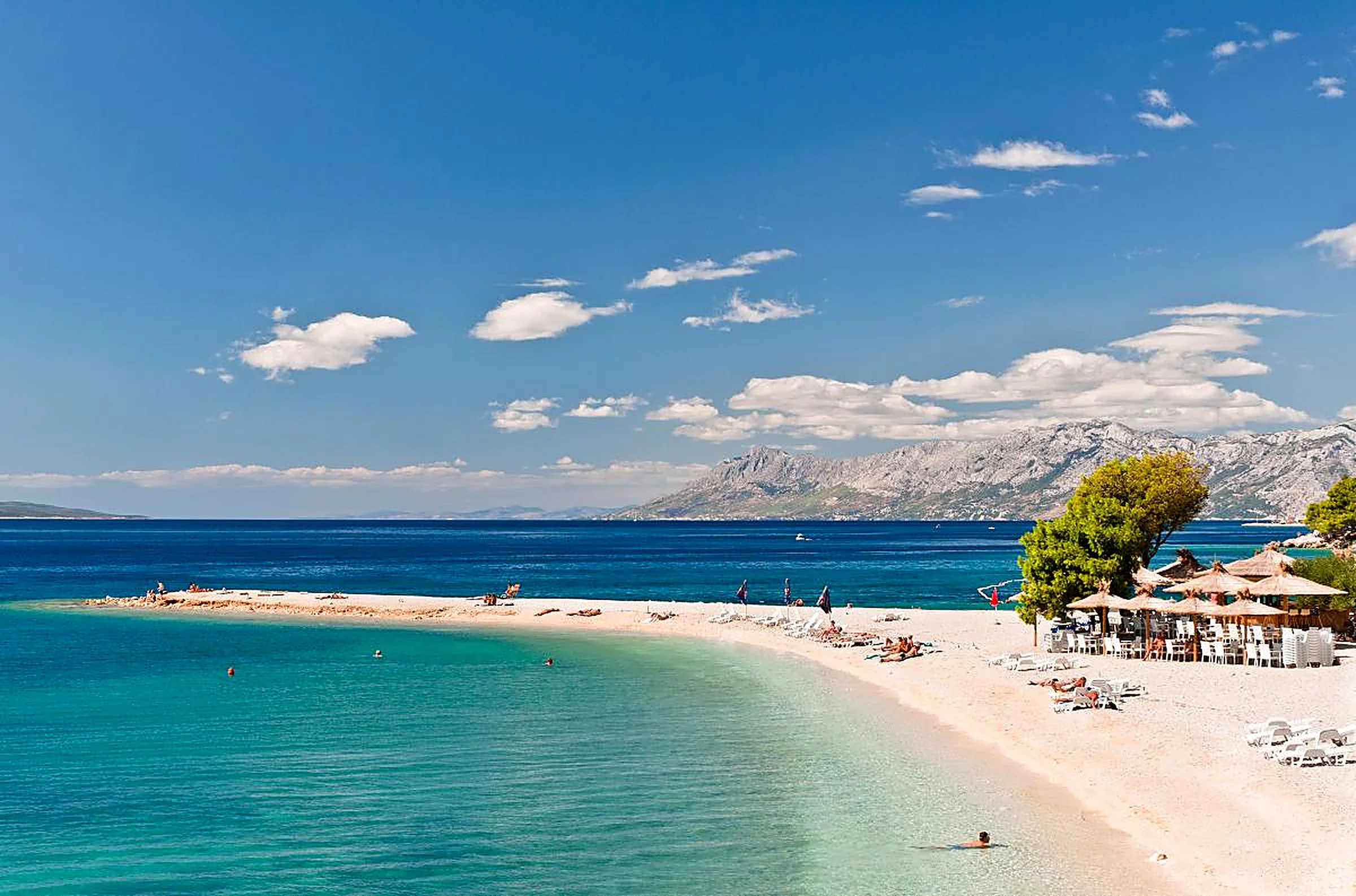
Villa Laurante sits in Tučepi, at the heart of the Makarska Riviera: a stretch of coast of about 60 km, from Brela in the north to Gradac in the south, where the limestone wall of Biokovo rises straight from the Adriatic. Mountain and sea are never more than a few kilometres apart here, and the islands of Brač and Hvar fill the horizon.
This guide brings together the places and experiences we recommend to our guests: the villages and towns of the Riviera, the history of Tučepi's hillside hamlets, the best of Biokovo, and day trips to some of the finest heritage sites on the Adriatic. Our concierge will be glad to arrange private transfers, guides, boats and reservations for any of them.
Driving times and distances in this guide are approximate road figures from Tučepi, as estimated by Rome2Rio. Actual times vary with season and traffic, especially in July and August.
Tučepi
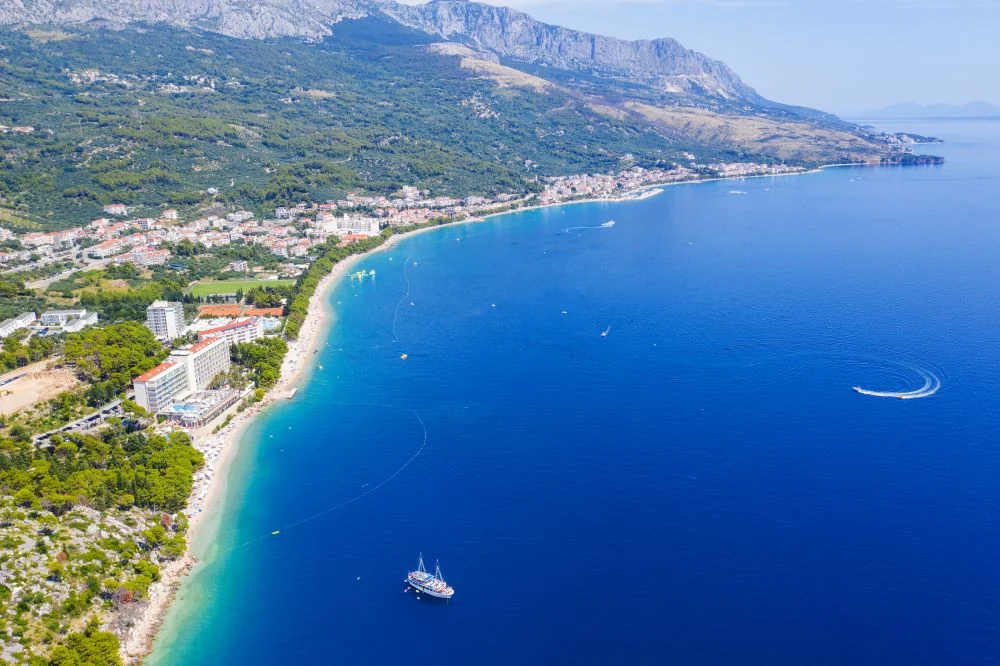
Tučepi is a small coastal municipality about 5 km south-east of Makarska, with 1,819 residents (2021 census). Its resort area along the sea, Tučepi-Kraj, stretches for about 4 km. Split Airport is about 80 km away, roughly 1 h 35 min by car.
The village is quieter and more spacious than Makarska, which is why many guests choose it as a base. Life moves between the seafront below and the old hamlets above the coast, where Villa Laurante stands.
Worth seeing in Tučepi
- Chapel of St George (Sv. Juraj) – a medieval chapel on the western side of the village, next to Hotel Neptun. The tourist board dates it to 1311. It stands inside a small archaeological park that tells of Tučepi's long history.
- Škrinjica ethno collection – a traditional interior set in an old stone house, with a welcome of homemade brandy and olive oil tasting. Visits by arrangement (+385 21 623 379).
- Buselić Tower – an old stone tower, one of the historic landmarks listed by the tourist board.
- The hamlets above the village – a network of stone houses, konobas and lanes on the slopes of Biokovo, described in the next section.
The name Tučepi is said to come from the Slavic word tucha, meaning cloud, a fitting name for a village beneath a mountain that often wears one.
Gornji Tučepi: the hamlets beneath Biokovo
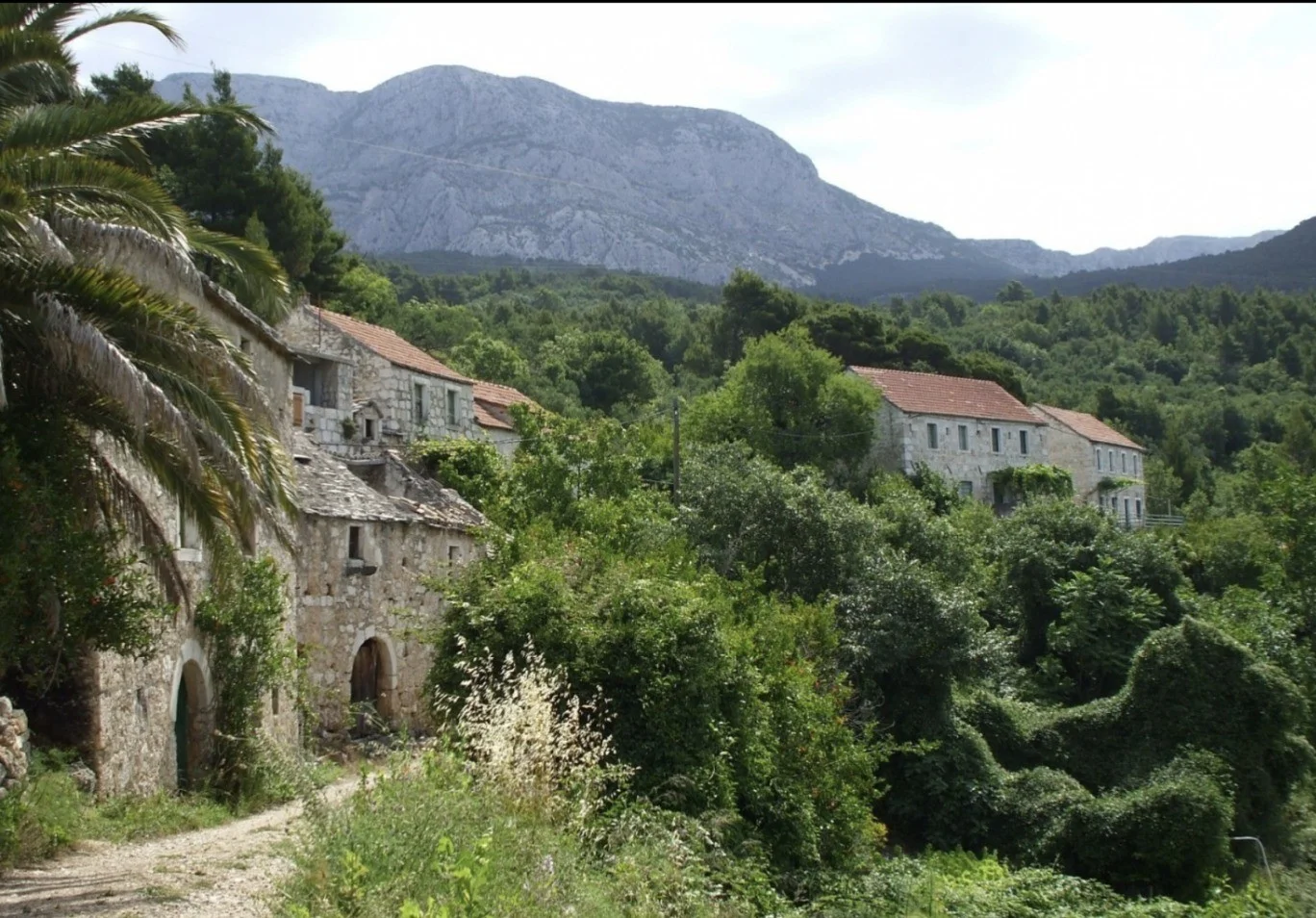
Before tourism turned Tučepi towards the sea, its people lived higher up, in a chain of stone hamlets at the foot of Biokovo. Villa Laurante stands in one of them, Srida Sela.
A village of hamlets. Tučepi was never a single compact village. Its families lived in scattered hamlets on the slopes: Srida Sela, Podpeć, Čovići, Mravičići, Ševelji, Šimići and Podstup. Each was a cluster of stone houses and konobas, the traditional Dalmatian cellars where wine, oil and food were kept. The tourist board speaks of a past reaching back some four thousand years.
The move to the coast. The descent towards the sea began gradually, as early as the 18th century. It became decisive in the 1960s, when residents moved a few kilometres down to the shore to build a new life around tourism. In January 1962 a strong double earthquake (magnitude 6.2) struck the Makarska area, and 3,256 buildings across the region collapsed. The old hamlets never recovered their population. Today they are mostly empty, though some of the old konobas are still in use.
A legend of a Venetian doge. Local folklore holds that the Venetian Doge Pietro I Candiano is buried in Tučepi. Historical sources record only that he was killed in a battle against the Narentines near Makarska in 887.
The hamlets come alive in summer. Since 2006 the festival Kultura u tučepskim zaseocima (kKuTz, Culture in the Tučepi Hamlets) has brought the old settlements back to life. Each week of the summer, a different hamlet opens its konobas for an evening of theatre, music, local food and wine, with around a thousand visitors per hamlet. Srida Sela, the hamlet around Villa Laurante, is one of the hosts. Ask us for this year's programme.
Old paths to the mountain. Historic footpaths still lead from the hamlets up Biokovo. One marked trail starts in Srida Sela and climbs past Sveta Kata, Mali vrv and Badališće to Ravna Vlaška, the site of the Skywalk, in about four hours (moderate). Another sets out from Grubišići towards Logršća Voda and Lađana, in about 3.5 hours.
Makarska
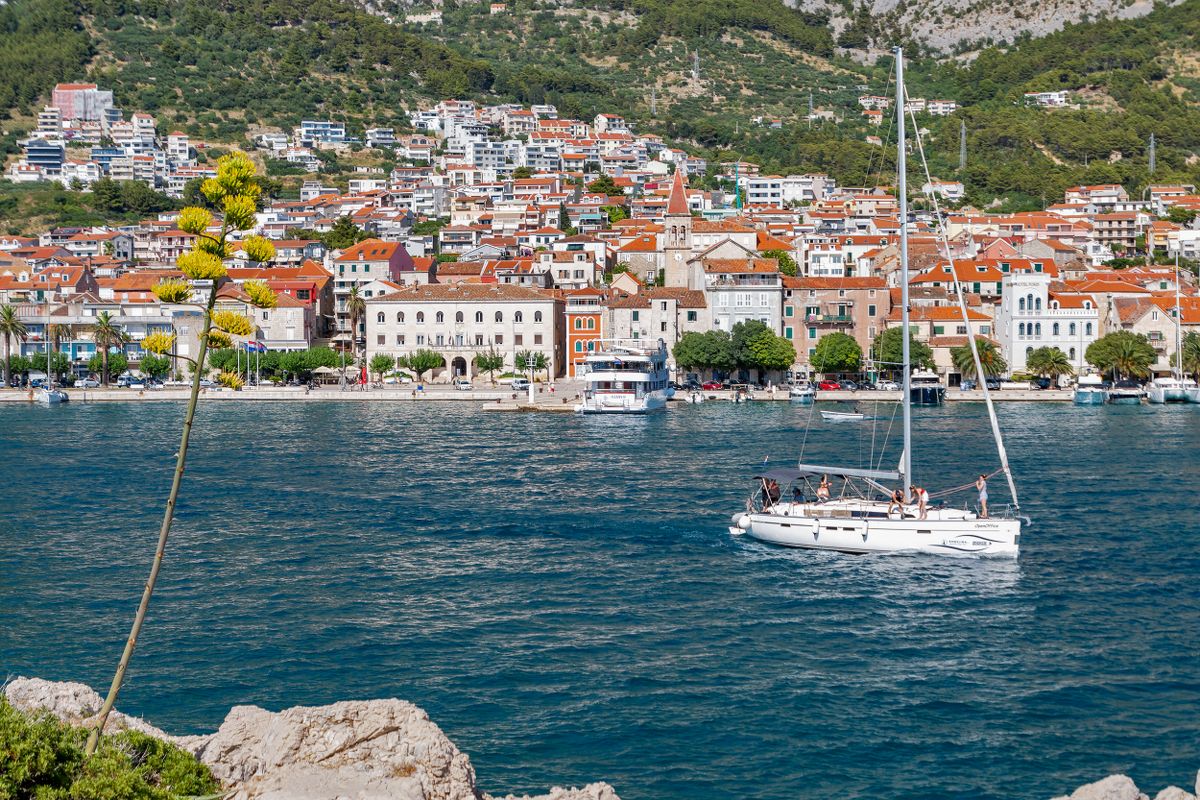
Makarska, about 6 km and 8 minutes by car from Tučepi, is the centre of the Riviera: a lively harbour town of 13,301 people (2021) on a horseshoe-shaped bay, sheltered by two pine-covered peninsulas, Sveti Petar and Osejava. Its palm-lined promenade, the Riva, is lined with cafés, restaurants and boutiques and is at its best in the early evening.
A short history
- Antiquity – a settlement existed here from the 2nd millennium BC. The Roman town of Muccurum became the seat of a bishop in 533 and was destroyed by the Ostrogoths of King Totila in 548.
- Middle Ages – in the early medieval period the area belonged to the Narentines, the seafaring Slavs whose fleets challenged Venice on the Adriatic.
- Ottoman and Venetian rule – the Ottomans took the coast in 1499; the name Makarska is first recorded in 1502. Venice recaptured it in 1646, and the town became a bishopric again in 1695, the start of its Baroque golden age.
- French and Austrian periods – the French ruled from 1806 to 1813 and brought the first schools teaching in Croatian. Austria-Hungary followed until 1918.
- Tourism – Makarska's first hotel opened in 1914, the beginning of the Riviera as a holiday destination.
Landmarks in the old town
- Kačić Square and the Co-Cathedral of St Mark – the main square is dominated by the Baroque church of St Mark, begun in 1700 and consecrated in 1756. Its altar holds the relics of St Clement, the town's patron, brought from the Roman catacombs in 1725. In front stands Ivan Rendić's bronze statue (1890) of Andrija Kačić Miošić (1704–1760), the Franciscan poet whose Razgovor ugodni naroda slovinskoga is a classic of Croatian literature.
- Venetian Fountain – an 18th-century fountain on Kačić Square, bearing the Venetian coat of arms.
- Franciscan Monastery and Malacological Museum – the 16th-century monastery houses a library with incunabula and a remarkable shell collection, founded in 1963 by the Franciscan scientist fra Jure Radić. More than 3,000 shells from the Adriatic and tropical seas are on display.
- Tonoli Palace – an 18th-century Venetian-style palace built for the Tonoli family, today home to the Makarska City Museum.
- St Philip Neri and the Ivanišević Palace – an 18th-century church and a Baroque palace, both part of the old town's historic core.
- Napoleon monument – erected in 1808 in honour of the French Marshal Marmont.
Around the town
- Sveti Petar peninsula – a walk through the pines to the 13th-century chapel of St Peter, rebuilt in 1993, and the lighthouse at its tip.
- Osejava forest park – a dense pine forest on the southern side of the bay, with walking paths, hidden coves and views over the town and the islands.
- Vepric shrine – a peaceful Marian shrine in the greenery below Biokovo, founded in 1908 and modelled on Lourdes.
- Kotišina Botanical Garden – 16.5 ha of the Biokovo Nature Park on the slopes above Makarska, at 350–500 m. Founded by fra Jure Radić, it holds around 300 native plant taxa, with a 17th-century fort near the entrance.
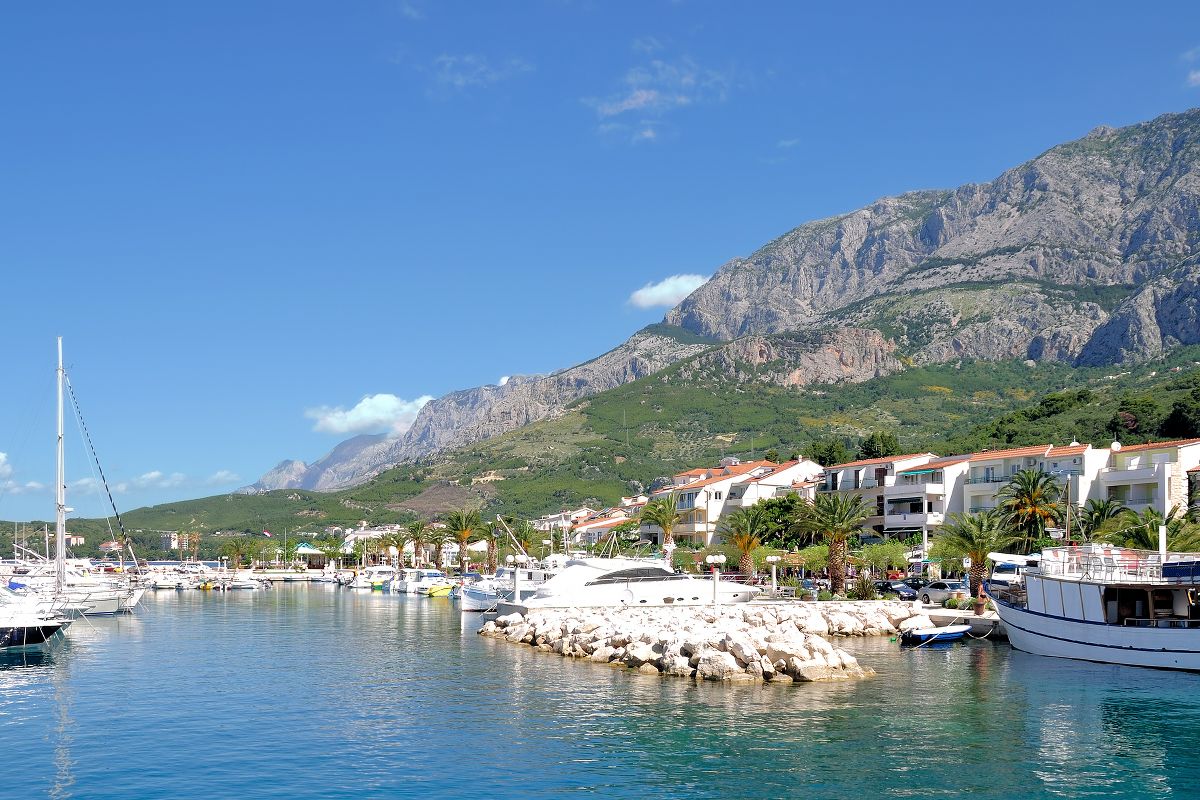
Things to see on the Riviera
Each village along the coast has its own character. These are the places we suggest for an unhurried drive or an evening out, listed from north to south.
| Place | Why go | By car from Villa Laurante |
|---|---|---|
| Brela | Punta Rata beach and the pine-topped islet of Kamen Brela, the village's symbol. In 2024 Lonely Planet named Punta Rata among the best beaches in the world. | approx. 17 km, 21 min |
| Baška Voda | A harbour village with the Late Baroque church of St Lawrence (1750) and Roman-era finds on the Gradina hill. | approx. 15 km, 17 min |
| Makarska | The Riviera's historic centre, see above. | approx. 6 km, 8 min |
| Igrane | A hillside village crowned by Kula Zale, a 17th-century tower built against Ottoman raids, and the 11th-century pre-Romanesque church of St Michael. | approx. 12 km, 13 min |
| Živogošće | A string of small coves and the Franciscan monastery of the Holy Cross by the sea. | approx. 14 km, 16 min |
| Drvenik | Two quiet bays beneath Biokovo and the ferry port for Sućuraj on Hvar. | approx. 24 km, 27 min |
| Gradac | The southern end of the Riviera, with the church of St Michael (1852) and its marble altars. | south of Drvenik, at the end of the Riviera |
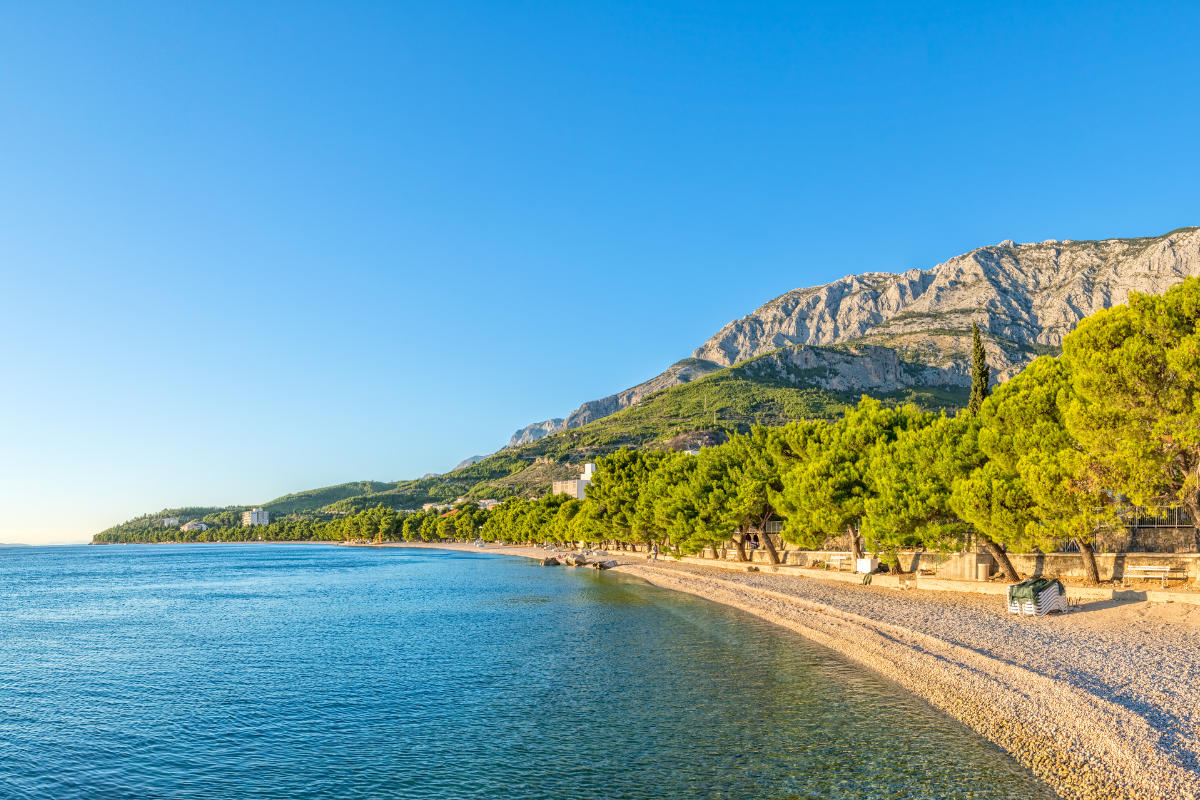
Biokovo from below. Wherever you are on the Riviera, the mountain is the backdrop. The best views of its limestone wall are from the sea, so a sunset boat ride along the coast is one of the most rewarding ways to see it.
Things to do
The Riviera rewards both the active and the unhurried. Everything below can be arranged through Laurante Concierge, so your days run at your own pace.
On the sea
- A private boat for the day – explore hidden bays along the coast and the islands of Brač and Hvar, with a stop for lunch at an island konoba.
- Diving – guided dives in the clear waters off the Riviera, for beginners and certified divers.
- Water sports – kayaking, paddleboarding and other water sports are available along the Tučepi seafront in summer.
- Sunset cruise – the best way to see Biokovo turn gold in the evening light.
On the mountain
- Guided hikes on Biokovo – historic paths lead from the hamlets around the villa up to the mountain (see Gornji Tučepi). We recommend going with a local guide: the terrain is steep and rocky, and Wikipedia records 24 deaths of hikers on Biokovo between 1976 and 2007. Good footwear, water and an early start are essential.
- Cycling and e-bike tours – guided routes along the coast and into the hinterland.
- Zip line – Tučepi has its own zip line for a quick dose of adrenaline.
Wellness
In-villa massage, private yoga sessions and personal training, around the villa's own spa, sauna, jacuzzi and gym.
Beauty treatments by visiting professionals.
Food and wine
- A private chef at the villa – a traditional Dalmatian dinner, fresh seafood, a barbecue or a tasting menu on the terrace.
- Tastings – curated wine, gin and olive oil tastings, at the villa or with local producers.
The Škrinjica ethno collection in Tučepi, for homemade brandy and olive oil in a traditional stone house.
- Oysters in Ston – a gastronomic day trip to the oyster beds of Mali Ston, about 1 h 45 min by car.
Summer evenings
- kKuTz in the hamlets – theatre, music, food and wine in the konobas of the old Tučepi hamlets, a different hamlet each week.
- Klapa evenings – Tučepi's summer programme includes a festival of klapa, the traditional Dalmatian a cappella singing.
- The Riva in Makarska – an evening stroll, an aperitif by the harbour and dinner in the old town, 8 minutes away by car.
Day trips
From Tučepi, some of the Adriatic's greatest sights are within a day's reach. Our concierge can arrange a private driver, a licensed guide or a private boat for each of them, and reserve lunch along the way.
| Day trip | By car from Villa Laurante |
|---|---|
| Biokovo Nature Park entrance | 6 km beyond Makarska; Skywalk a further 13 km, about 30 min |
| Ferry to Brač (Makarska port) | approx. 6 km, 8 min |
| Ferry to Hvar (Drvenik port) | approx. 24 km, 27 min |
| Imotski (Blue and Red Lakes) | approx. 40 km, 52 min |
| Omiš and the Cetina canyon | approx. 42 km, 49 min |
| Ljubuški, for Kravica waterfall | approx. 52 km, 1 h 6 min |
| Split | approx. 67 km, 1 h 20 min |
| Metković, for Narona in Vid | approx. 68 km, 1 h 18 min |
| Počitelj | approx. 73 km, 1 h 25 min |
| Trogir | approx. 87 km, 1 h 40 min |
| Mostar | approx. 88 km, 1 h 45 min |
| Ston | approx. 100 km, 1 h 45 min |
| Dubrovnik | approx. 146 km, 2 h 35 min |
Biokovo Nature Park and the Skywalk
Biokovo has been a nature park since 1981. Its highest peak, Sveti Jure (1,762 m), is reached by a 23 km mountain road from the park entrance, which the park describes as the highest road in Croatia. On clear days the view stretches over the islands to the mountains of Herzegovina, and occasionally as far as Monte Gargano in Italy.
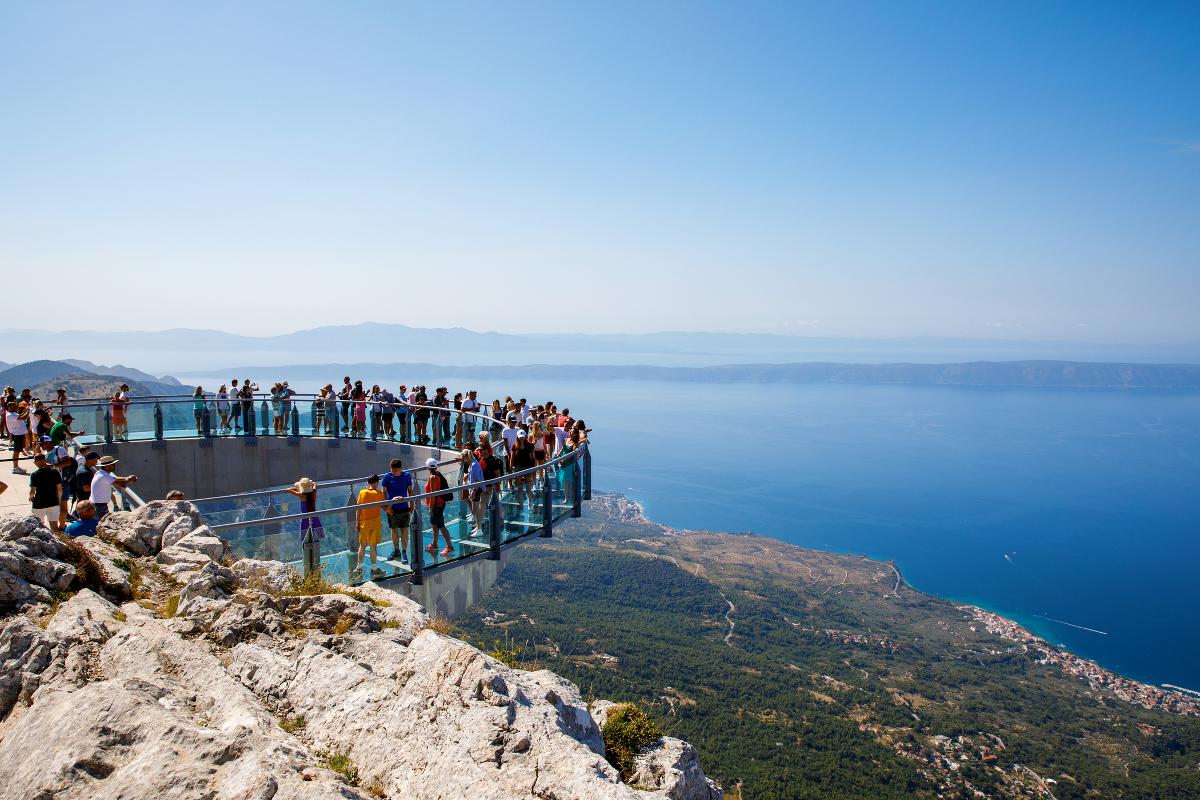
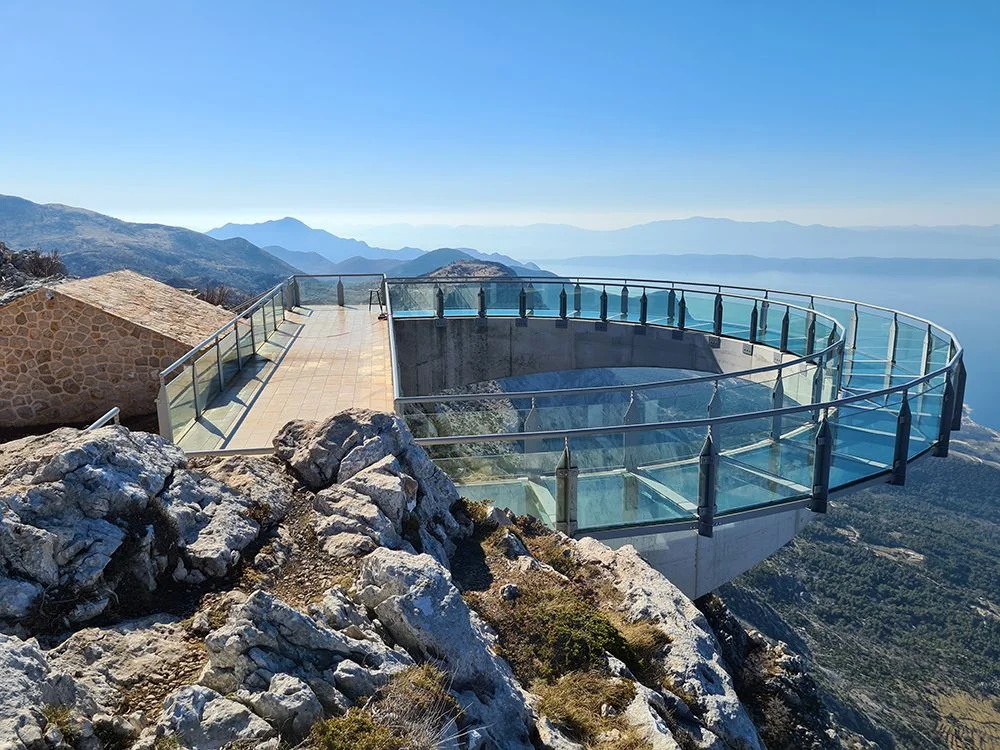
Halfway up, at 1,228 m, the Skywalk Biokovo is a horseshoe-shaped walkway with a glass floor, projecting about 11 m over the cliff edge. It was the first structure of its kind in Croatia. From the pool at Villa Laurante, look towards the north, scan the mountain peaks, and you will easily spot the glass structure of Skywalk Biokovo.
- Season – the park is officially open from April to October and closed to visitors from 1 November to 31 March.
- Access – entry is limited to 20 vehicles per hour, and tickets are sold on the park's website. Up to 30 people may stand on the Skywalk at once, for a maximum of 10 minutes.
- Our advice – the road is narrow, single-lane and steep. A private driver or a guided minibus tour is the relaxed way to enjoy it. Go early for clear air and soft light. Do not hesitate to ask your concierge for assistance.
The islands: Brač and Hvar
The islands in front of your sight while at Laurante are one of the most popular Croatian islands.
- Brač – Zlatni Rat near Bol is a pebble spit reaching into the Hvar Channel, whose tip shifts with the wind and current. The afternoon maestral makes it a favourite with windsurfers. On the south side of the island, the Blaca Hermitage was founded in 1551 by Glagolitic monks and inhabited until 1963.
- Hvar – Hvar Town has the largest square in Dalmatia, a 13th-century fortified core and the Arsenal theatre of 1612. Near Stari Grad, the Stari Grad Plain preserves the field system laid out by Greek colonists in the 4th century BC, still farmed with vines and olives.
- Getting there – car ferries run from Makarska to Sumartin on Brač and from Drvenik to Sućuraj on Hvar. A private boat from the Riviera is the most comfortable way to combine bays, beaches and lunch.
Split and Trogir
- Split – Diocletian's Palace was built at the end of the 3rd century AD as the retirement residence of the Roman Emperor Diocletian. It has been a UNESCO World Heritage Site since 1979 and today forms about half of Split's old town. The emperor's mausoleum is now the Cathedral of St Domnius, beside the Peristyle.
- Trogir – a UNESCO-listed island town with a street plan dating back to the Hellenistic period. The Cathedral of St Lawrence has a celebrated west portal completed in 1240, and the Cipiko Palace faces it across the square.
- Klis Fortress – on a pass above Split, defended against the Ottomans for more than 25 years before it fell in 1537. Its present form is largely Venetian.
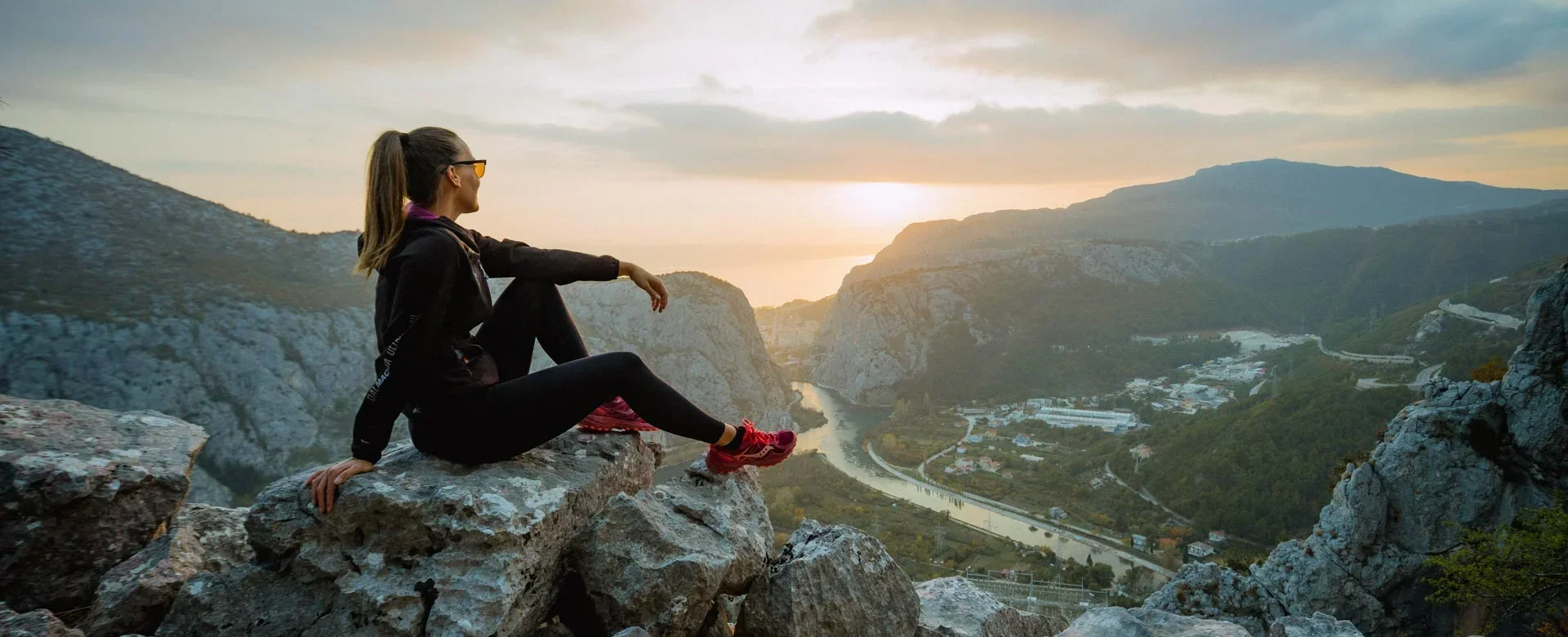
Omiš and the Cetina canyon
Omiš, at the mouth of the Cetina, was once the base of the feared Omiš pirates. Above the town stand the 13th-century Mirabella fortress and the 15th-century Starigrad (Fortica) fortress, on a ridge 262 m above the sea. The Cetina canyon offers rafting, canyoning, kayaking and zip-lining. Strongly recommended for adrenalin lovers.
Imotski: the Blue and Red Lakes
Two extraordinary karst lakes lie just across Biokovo. The Blue Lake fills a sinkhole about 220 m deep, and its water level changes dramatically with the seasons; it can disappear completely by late summer. The Red Lake, named after its iron-red cliffs, rises more than 241 m above the water and is considered one of the largest sinkholes in the world.
Neretva valley, Narona and Ston
- The Neretva delta – a wetland of about 12,000 ha, protected under the Ramsar Convention since 1992. It is best explored by traditional boat.
- Narona Archaeological Museum, Vid – opened in 2007 as Croatia's first museum built in situ, directly over the Roman Augusteum. Visitors walk above the original floor and see the marble imperial statues where they were found.
- Ston and Mali Ston – the Walls of Ston, begun in 1358 by the Republic of Dubrovnik, once ran for more than 7 km and still extend about 5.5 km. They protected salt pans that are worked to this day. Oysters and mussels have long been farmed in the bay of Mali Ston.
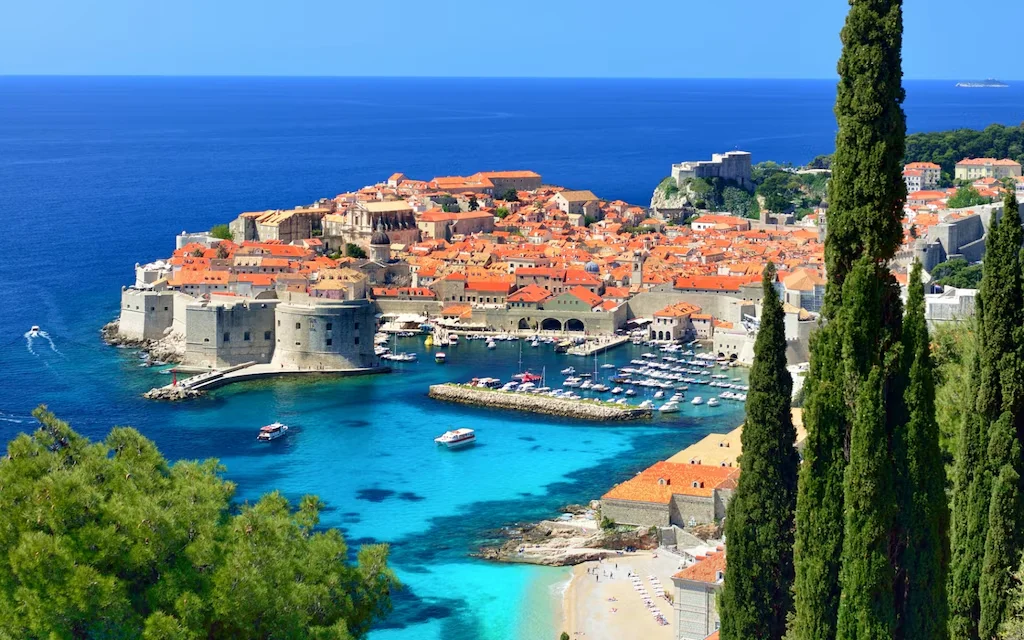
Dubrovnik
The old city of Dubrovnik has been a UNESCO World Heritage Site since 1979. Its walls, built mainly between the 13th and 17th centuries, run for about 1,940 m and rise up to 25 m. A walk along them, ideally early in the morning or late in the afternoon, is unforgettable. This is a full-day trip; a private driver and an advance booking for lunch are recommended.
Mostar and Herzegovina (Bosnia and Herzegovina)
- Mostar – the Old Bridge (Stari Most), destroyed in the 1990s war, was rebuilt in 2004 and is the heart of a UNESCO-listed old town. The name Mostar comes from the mostari, the bridge keepers.
- Počitelj – a walled Ottoman-era village on the Neretva, about 30 km south of Mostar, preserved as an open-air museum.
- Kravica waterfall – a 25 m tufa cascade on the Trebižat river, 10 km south of Ljubuški.
- Note – this trip crosses an international border, so guests need a valid passport or ID card.
History and culture: museums and heritage sites
For guests who travel for history, this is a quick reference to the region's museums and heritage sites, from Roman temples to Venetian fortresses, nearest first. Driving figures are approximate, from Rome2Rio.
| Site | Period | Highlights | By car from Villa Laurante |
|---|---|---|---|
| Chapel of St George and archaeological park | Medieval (1311, per the tourist board) | Tučepi's oldest landmark, set in a small archaeological park | In Tučepi |
| Škrinjica ethno collection | Traditional rural life | An old stone house with a traditional interior; brandy and olive oil tasting | In Tučepi |
| Co-Cathedral of St Mark | 1700–1756, Baroque | Relics of St Clement; Kačić monument (1890) on the square | Makarska, approx. 6 km, 8 min |
| Franciscan Monastery and Malacological Museum | 16th century; museum 1963 | Over 3,000 shells; library with incunabula | Makarska, approx. 6 km, 8 min |
| Tonoli Palace, Makarska City Museum | 18th century | Venetian-style palace with the town's history collection | Makarska, approx. 6 km, 8 min |
| Kula Zale and church of St Michael | 11th and 17th centuries | Pre-Romanesque church and an anti-Ottoman tower above the sea | Igrane, approx. 12 km, 13 min |
| Mirabella and Starigrad fortresses | 13th and 15th centuries | Strongholds of the Omiš pirates and defences against the Ottomans | Omiš, approx. 42 km, 49 min |
| Diocletian's Palace | c. AD 295–305 | A Roman emperor's palace that is still a living old town | Split, approx. 67 km, 1 h 20 min |
| Klis Fortress | Medieval to Venetian | Hilltop fortress with views over Split and Salona | Above Split |
| Historic Trogir | Hellenistic to Renaissance | Cathedral of St Lawrence, Cipiko Palace | Trogir, approx. 87 km, 1 h 40 min |
| Stari Grad Plain | 4th century BC onwards | Greek field system farmed for 24 centuries | Hvar: ferry from Drvenik (approx. 24 km, 27 min) |
| Blaca Hermitage | 1551–1963 | Monastic settlement in a remote valley | Brač: ferry from Makarska (approx. 6 km, 8 min) |
| Narona Archaeological Museum | Roman, 1st century BC onwards | Croatia's first in situ museum, over the Augusteum and its imperial statues | Vid, near Metković, approx. 68 km, 1 h 18 min |
| Počitelj | Ottoman (1471–1878) | Walled village, an open-air museum | Bosnia and Herzegovina, approx. 73 km, 1 h 25 min |
| Old Bridge Area of Mostar | Ottoman; rebuilt 2004 | Stari Most and the old bazaar quarter | Bosnia and Herzegovina, approx. 88 km, 1 h 45 min |
| Walls of Ston | From 1358 | About 5.5 km of walls guarding historic salt pans | Ston, approx. 100 km, 1 h 45 min |
| Old City of Dubrovnik | 13th–17th-century walls | 1,940 m of city walls; the former Republic of Dubrovnik | Dubrovnik, approx. 146 km, 2 h 35 min |
Opening hours of museums and sites change with the season and many close or shorten their hours in winter. We will be happy to check them and book guided visits for you.
How to get here
Approximate road distances from Villa Laurante.
80 km
Split Airport
6 km
Makarska centre
6 km
Ferry to Brač (Makarska)
24 km
Ferry to Hvar (Drvenik)
Villa Laurante
Srida sela 43a, 21325 Tučepi